
Efficiently moving goods and services across the globe is the lifeblood of modern commerce, and at the heart of this intricate system lies transportation logistics management. This critical field encompasses the planning, implementation, and control of the flow of goods, from origin to destination, ensuring timely delivery while minimizing costs and maximizing efficiency. It’s a dynamic landscape constantly evolving with technological advancements and global market shifts, demanding innovative solutions and strategic thinking.
This exploration delves into the core components of transportation logistics management, examining various transportation modes, optimization strategies, inventory management techniques, and risk mitigation approaches. We will also consider the crucial role of technology, sustainability initiatives, and the financial implications of effective logistics practices. Understanding these elements is vital for businesses aiming to streamline operations, reduce expenses, and enhance their competitive edge in today’s interconnected world.
Defining Transportation Logistics Management
Transportation logistics management is the process of planning, implementing, and controlling the efficient, effective flow and storage of goods, services, and related information from the point of origin to the point of consumption to meet customer requirements. It encompasses a broad range of activities, from selecting the appropriate transportation mode to managing inventory and tracking shipments. Effective transportation logistics management is crucial for businesses of all sizes to maintain competitiveness and profitability.
Core Components of Transportation Logistics Management
The core components of transportation logistics management are interconnected and work together to ensure the smooth movement of goods. These include: network design, mode selection, carrier selection, shipment consolidation, route optimization, freight documentation, tracking and tracing, and exception management. Network design involves strategically planning the optimal locations for warehouses and distribution centers. Mode selection considers the various transportation options (road, rail, sea, air) based on factors like cost, speed, and reliability.
Carrier selection involves choosing the right transportation provider based on their service quality and pricing. Shipment consolidation groups multiple shipments together to reduce costs and improve efficiency. Route optimization utilizes technology to determine the most efficient routes for deliveries. Freight documentation ensures all necessary paperwork is in order. Tracking and tracing monitors shipments throughout their journey.
Exception management handles unexpected delays or disruptions.
Transportation Logistics vs. Supply Chain Management
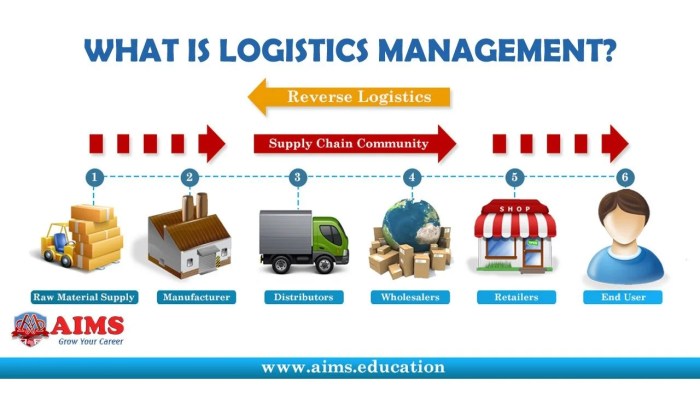
While transportation logistics is a critical component of supply chain management, they are not interchangeable. Supply chain management encompasses the entire process of getting a product from raw materials to the end consumer, including procurement, manufacturing, warehousing, and distribution. Transportation logistics focuses specifically on the movement of goods within this broader supply chain. Think of it this way: supply chain management is the orchestra, while transportation logistics is the section of string instruments – an important part, but not the whole.
Supply chain management considers the overall strategy and optimization of the entire flow of goods and information, while transportation logistics focuses on the efficient and cost-effective movement of goods as one part of that larger strategy.
Examples of Different Transportation Modes and Their Applications
Several transportation modes exist, each with its strengths and weaknesses. Road transportation, using trucks, offers flexibility and accessibility, making it ideal for last-mile delivery and smaller shipments. Rail transportation, using trains, is cost-effective for large volumes over long distances, but less flexible regarding delivery points. Sea transportation, using ships, is the most economical for very large volumes transported internationally, but significantly slower than other modes.
Air transportation, using airplanes, is the fastest mode, suitable for urgent or high-value goods, but also the most expensive. Pipeline transportation is used for transporting liquids and gases over long distances, such as oil and natural gas.
Cost-Effectiveness and Speed of Various Transportation Methods
| Transportation Mode | Cost-Effectiveness | Speed | Suitability |
|---|---|---|---|
| Road | Medium | Medium | Last-mile delivery, smaller shipments |
| Rail | High | Low | Large volumes, long distances |
| Sea | Very High | Very Low | International shipping, very large volumes |
| Air | Low | Very High | Urgent or high-value goods |
Inventory Management within Transportation Logistics
Effective inventory management is paramount to successful transportation logistics. It directly influences operational efficiency, cost control, and customer satisfaction. By strategically managing inventory levels across the supply chain, businesses can optimize transportation processes, minimize waste, and improve overall profitability. This section will explore the critical role of inventory management in transportation logistics.Inventory levels significantly impact both transportation costs and delivery times.
High inventory levels necessitate larger warehouses, increased storage costs, and more frequent, potentially less efficient, shipments. Conversely, low inventory levels risk stockouts, leading to delayed deliveries, lost sales, and potentially damage to customer relationships. Finding the optimal balance is crucial for efficient operations. For instance, a company holding excessive raw materials might experience high warehousing and insurance costs, while a company with insufficient finished goods might face production delays and lost revenue due to inability to meet customer demand promptly.
The Role of Inventory Management in Efficient Transportation Logistics
Inventory management plays a crucial role in optimizing transportation logistics by enabling better planning and execution of shipments. Accurate inventory data allows for precise forecasting of transportation needs, leading to more efficient route planning, vehicle utilization, and reduced empty mileage. This contributes to lower fuel consumption, decreased emissions, and reduced overall transportation expenses. Real-time inventory visibility also enables proactive management of potential delays or disruptions, allowing for swift adjustments to transportation schedules to mitigate negative impacts.
For example, if a sudden surge in demand is detected, inventory levels can be adjusted and transportation resources can be reallocated accordingly to ensure timely deliveries.
Impact of Inventory Levels on Transportation Costs and Delivery Times
The relationship between inventory levels and transportation costs is directly proportional. Higher inventory necessitates more frequent and larger shipments, increasing transportation expenses. Conversely, lower inventory might lead to smaller, less cost-effective shipments, increasing the per-unit cost of transportation. Delivery times are also affected. High inventory generally allows for faster delivery times as goods are readily available for shipment.
However, excessive inventory can lead to longer storage times, negating the benefits of faster shipping. Low inventory, on the other hand, leads to longer lead times and delayed deliveries, potentially frustrating customers. For example, a retailer with a large inventory of seasonal goods might experience high storage costs during off-peak seasons, while a retailer with low inventory might experience stockouts during peak demand, leading to lost sales and dissatisfied customers.
Inventory Management Techniques Used in Transportation Logistics
Several inventory management techniques help optimize transportation logistics. These include techniques such as ABC analysis, which prioritizes inventory based on value and consumption; Just-in-Time (JIT) inventory management, which minimizes inventory holding by coordinating production and delivery precisely when needed; and Vendor Managed Inventory (VMI), where suppliers manage inventory levels at customer locations. Demand forecasting plays a significant role in all these methods, helping to predict future demand and optimize inventory levels.
Efficient warehousing practices, including optimized storage layouts and effective picking and packing processes, also contribute to efficient inventory management and streamlined transportation. For instance, a company using ABC analysis might focus on optimizing transportation for its high-value items, ensuring their timely delivery while employing more cost-effective methods for low-value items.
Comparison of Just-in-Time and Kanban Inventory Management Strategies
Just-in-Time (JIT) and Kanban are two popular inventory management strategies. JIT aims to minimize inventory by receiving materials only when needed for production. This reduces storage costs and waste, but requires highly efficient supply chain coordination and precise demand forecasting. Kanban, a visual inventory control system, uses cards or signals to trigger replenishment of materials. It’s simpler to implement than JIT and provides better visibility of inventory levels.
However, it might not be as effective in highly volatile demand environments. While both aim to reduce inventory holding costs, JIT focuses on eliminating waste throughout the entire production process, whereas Kanban primarily focuses on managing the flow of materials within a specific production process. A manufacturing company might utilize JIT for its core components, while using Kanban for less critical supplies.
Technology and Transportation Logistics Management
The integration of technology is revolutionizing transportation logistics management, driving efficiency, transparency, and security across the supply chain. From optimizing routes to enhancing security measures, technological advancements are reshaping the industry, allowing for faster delivery times, reduced costs, and improved customer satisfaction. This section explores the key technological advancements impacting transportation logistics.
Data Analytics in Transportation Efficiency
Data analytics plays a crucial role in optimizing transportation efficiency. By leveraging large datasets encompassing shipment data, weather patterns, traffic conditions, and fuel prices, logistics managers can make data-driven decisions to improve route planning, predict potential delays, and optimize fleet management. For instance, predictive analytics can forecast potential disruptions, enabling proactive adjustments to minimize delays and costs. Real-time tracking and monitoring of shipments provide valuable insights into delivery times and potential issues, allowing for immediate corrective actions.
This enhanced visibility improves overall efficiency and reduces operational costs. The use of sophisticated algorithms can analyze historical data to identify patterns and trends, leading to better forecasting and resource allocation.
Blockchain Technology in Transportation Transparency and Security
Blockchain technology offers a secure and transparent platform for managing and tracking shipments throughout the supply chain. Its decentralized nature eliminates the need for a central authority, enhancing data integrity and security. Each transaction or event in the shipment’s journey is recorded as a block on the blockchain, creating an immutable audit trail. This provides enhanced transparency, enabling all stakeholders to access real-time information about the shipment’s location and status.
Furthermore, blockchain technology can reduce the risk of fraud and counterfeiting by ensuring the authenticity and traceability of goods. For example, a pharmaceutical company could use blockchain to track the movement of its drugs from manufacturing to the end consumer, ensuring that the products are not tampered with during transit.
Automation and Robotics in Transportation Processes
Automation and robotics are transforming various aspects of transportation logistics, from warehousing and sorting to autonomous delivery vehicles. Automated guided vehicles (AGVs) and automated storage and retrieval systems (AS/RS) are improving warehouse efficiency by automating material handling processes. Robotics are playing an increasingly significant role in tasks such as palletizing, picking, and packing, reducing labor costs and improving accuracy.
The development of autonomous trucks and delivery drones is further revolutionizing transportation, offering the potential for increased efficiency and reduced delivery times, particularly for last-mile delivery. Companies like Amazon are already utilizing robotic systems extensively in their fulfillment centers, showcasing the significant impact of automation on warehouse operations.
Comparison of Transportation Management Systems (TMS)
Different TMS offer varying functionalities and capabilities to suit specific business needs. Choosing the right TMS is crucial for optimizing transportation operations. The following table compares some key features of different TMS providers.
| TMS Provider | Key Features | Strengths | Weaknesses |
|---|---|---|---|
| Oracle Transportation Management | Route optimization, shipment tracking, carrier management, yard management | Comprehensive functionality, robust integration capabilities | Can be expensive, complex implementation |
| SAP Transportation Management | Freight planning, execution, settlement, and analytics | Seamless integration with other SAP modules | Steep learning curve, high initial investment |
| Blue Yonder Luminate Transportation Management | Real-time visibility, predictive analytics, collaborative transportation planning | Strong focus on AI and machine learning | May require significant data integration |
| Manhattan Associates Transportation Management | Multi-modal transportation management, order management integration, yard management | User-friendly interface, strong support for omnichannel operations | Limited reporting capabilities in some versions |
The Future of Transportation Logistics Management
The transportation logistics industry stands on the cusp of a transformative era, driven by rapid technological advancements and evolving global demands. The coming years will see a fundamental shift in how goods are moved, tracked, and managed, impacting everything from supply chain efficiency to environmental sustainability. This section explores the key trends shaping the future of this critical sector.
Predicting Future Trends in Transportation Logistics
Several key trends are poised to significantly reshape the transportation logistics landscape. Increased automation, driven by advancements in artificial intelligence and machine learning, will lead to more efficient route optimization, predictive maintenance, and real-time shipment tracking. The rise of e-commerce continues to fuel demand for faster and more reliable delivery options, prompting the adoption of innovative solutions like last-mile delivery optimization and the integration of various transportation modes.
Furthermore, a growing emphasis on sustainability is pushing the industry towards greener transportation methods, including electric vehicles, alternative fuels, and optimized routing to reduce carbon emissions. For example, companies like Amazon are heavily investing in electric vehicle fleets for their last-mile delivery operations, reflecting this broader industry trend. The increasing complexity of global supply chains will also necessitate more sophisticated logistics management systems capable of handling real-time data analysis and proactive risk management.
Impact of Emerging Technologies
Autonomous vehicles, including self-driving trucks and delivery robots, hold the potential to revolutionize transportation logistics. Autonomous trucks could significantly reduce labor costs, improve safety, and increase operational efficiency by enabling continuous operation and optimized routing. Drones are already being used for last-mile delivery in certain contexts, offering faster delivery times and access to remote areas. However, widespread adoption of these technologies faces challenges, including regulatory hurdles, technological maturity, and public acceptance.
For instance, the regulatory framework surrounding autonomous vehicles is still evolving in many countries, creating uncertainty for potential adopters. The integration of blockchain technology offers increased transparency and security in supply chain management, improving traceability and reducing the risk of fraud. Real-time data analytics, powered by the Internet of Things (IoT), provides valuable insights into shipment status, allowing for proactive interventions and improved decision-making.
Challenges and Opportunities in Transportation Logistics
The industry faces significant challenges, including the increasing complexity of global supply chains, the need for greater sustainability, and the skills gap in the workforce. Managing disruptions, such as natural disasters or geopolitical instability, requires robust contingency planning and risk management strategies. The shortage of skilled logistics professionals presents a significant hurdle to industry growth. However, these challenges also present opportunities.
The demand for sustainable transportation solutions creates opportunities for innovative companies developing green technologies. The need for improved supply chain resilience drives investment in advanced technologies and data analytics. The skills gap offers opportunities for educational institutions and training programs to develop a skilled workforce for the future. Companies that can effectively adapt to these challenges and capitalize on emerging opportunities will be well-positioned for success.
Vision for Sustainable and Efficient Transportation Logistics
A future vision for transportation logistics centers around a highly automated, sustainable, and efficient system. This involves widespread adoption of electric and alternative fuel vehicles, optimized routing algorithms to minimize fuel consumption and emissions, and the use of renewable energy sources to power logistics operations. Advanced technologies like AI and machine learning will play a crucial role in optimizing routes, predicting demand, and managing resources effectively.
Increased collaboration and data sharing across the supply chain will enhance transparency and improve overall efficiency. A focus on workforce development will ensure that the industry has the skilled professionals needed to manage this complex and evolving landscape. This vision requires collaboration between industry stakeholders, policymakers, and technology providers to create a future where transportation logistics are both efficient and environmentally responsible.
In conclusion, mastering transportation logistics management is paramount for businesses seeking to thrive in a competitive global market. From optimizing routes and managing inventory to mitigating risks and embracing sustainable practices, each aspect plays a vital role in ensuring efficient and cost-effective operations. The future of this field is bright, driven by technological innovation and a growing emphasis on sustainability.
By understanding and implementing the principles discussed, businesses can navigate the complexities of the modern supply chain, achieving greater profitability and resilience in the face of ever-changing challenges.
Commonly Asked Questions
What is the difference between LTL and FTL shipping?
LTL (Less Than Truckload) shipping involves transporting smaller shipments with other consignments, sharing truck space and cost. FTL (Full Truckload) utilizes an entire truck for a single shipment, offering greater speed and control but at a higher cost.
How does transportation logistics impact a company’s carbon footprint?
Transportation significantly contributes to a company’s carbon emissions through fuel consumption. Efficient routing, modal selection (favoring rail or sea over air), and the use of fuel-efficient vehicles directly impact the environmental impact.
What are some common transportation logistics challenges?
Common challenges include fluctuating fuel prices, driver shortages, port congestion, unpredictable weather conditions, and regulatory compliance issues. Effective risk management strategies are crucial to mitigate these.
What is the role of a Transportation Management System (TMS)?
A TMS is software that helps optimize transportation planning, execution, and tracking. It automates tasks, improves visibility, reduces costs, and enhances overall efficiency across the supply chain.


