
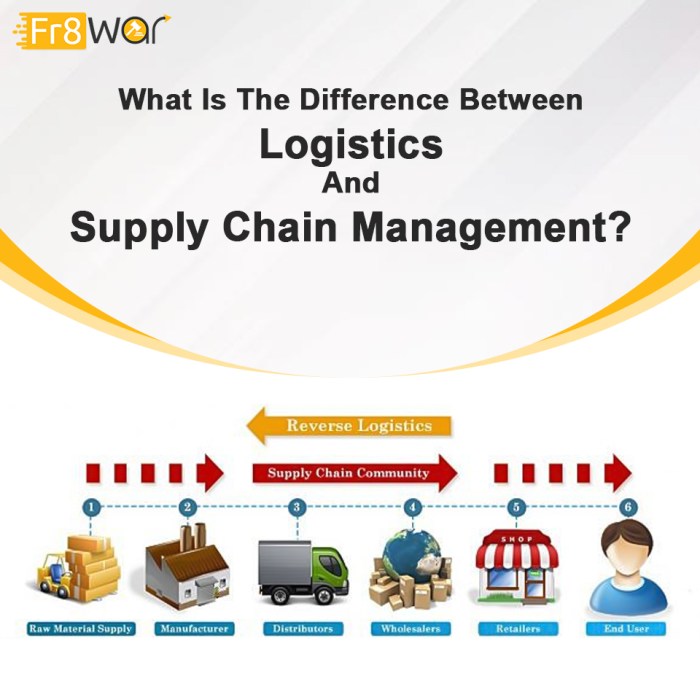
Efficient supply chain logistics management is the backbone of successful modern businesses. It encompasses the intricate planning, implementation, and control of the flow of goods, services, and information from origin to consumption. This involves optimizing every step, from sourcing raw materials and manufacturing to warehousing, transportation, and ultimately, delivering the final product to the end customer. Understanding the complexities of this system is crucial for competitiveness and profitability in today’s globalized marketplace.
This guide delves into the key aspects of supply chain logistics management, exploring inventory control strategies, risk mitigation techniques, the impact of technological advancements, and the growing importance of sustainability. We will examine various models, analyze the role of liquidity management, and discuss the unique challenges presented by global operations. The goal is to provide a clear and comprehensive understanding of this critical business function.
Risk Management in Supply Chain Logistics
Effective risk management is crucial for the success and resilience of any supply chain. Unforeseen events can significantly disrupt operations, leading to financial losses, reputational damage, and ultimately, failure. Proactive identification and mitigation of potential risks are therefore paramount for maintaining a robust and efficient logistics network.
Potential Supply Chain Disruptions
A multitude of factors can disrupt supply chain logistics. These disruptions can range from relatively minor inconveniences to catastrophic events significantly impacting operations. Understanding the potential sources of these disruptions allows for the development of effective risk mitigation strategies. These disruptions can be broadly categorized into internal and external factors. Internal factors include issues with production, inventory management, or internal transportation, while external factors encompass geopolitical instability, natural disasters, and economic downturns.
- Natural Disasters: Earthquakes, floods, hurricanes, and wildfires can damage infrastructure, disrupt transportation networks, and destroy inventory, halting operations for extended periods. The 2011 Tohoku earthquake and tsunami in Japan, for example, severely impacted global supply chains due to the disruption of electronics manufacturing and component supply.
- Geopolitical Instability: Political unrest, trade wars, and terrorism can lead to border closures, transportation delays, and increased security costs. The ongoing conflict in Ukraine has illustrated the significant impact of geopolitical instability on global supply chains, particularly in the energy and agricultural sectors.
- Supplier Relationship Issues: Supplier bankruptcy, production delays, or quality control problems can severely impact the availability of raw materials and components, causing production bottlenecks and delivery delays. The global chip shortage in recent years highlighted the vulnerability of supply chains to disruptions originating from a single supplier.
- Pandemics: Outbreaks of infectious diseases, like the COVID-19 pandemic, can lead to widespread disruptions due to lockdowns, workforce shortages, and border restrictions. The pandemic forced many businesses to rethink their supply chain strategies, emphasizing resilience and diversification.
- Cybersecurity Threats: Cyberattacks targeting supply chain systems can lead to data breaches, operational disruptions, and financial losses. The NotPetya ransomware attack in 2017 caused billions of dollars in damages across various industries, highlighting the vulnerability of digital supply chain infrastructure.
Strategies for Mitigating Supplier Relationship Risks
Strong supplier relationships are essential for a resilient supply chain. However, reliance on a limited number of suppliers can create vulnerabilities. Diversification of suppliers, coupled with robust contract management and performance monitoring, can significantly mitigate risks.
- Supplier Diversification: Spreading sourcing across multiple suppliers reduces the impact of disruptions affecting a single vendor. This strategy requires careful selection of alternative suppliers based on factors such as reliability, quality, and cost.
- Robust Contract Management: Clearly defined contracts that specify performance expectations, penalties for non-compliance, and dispute resolution mechanisms are crucial. Regular performance reviews and open communication help maintain healthy relationships and identify potential issues early.
- Supplier Relationship Management (SRM): Implementing a comprehensive SRM system enables continuous monitoring of supplier performance, risk assessment, and collaborative problem-solving. This proactive approach helps build trust and strengthen partnerships.
- Regular Audits and Assessments: Conducting regular audits of supplier facilities and operations helps identify potential risks and ensure compliance with quality and safety standards. This includes evaluating supplier financial stability and capacity.
Contingency Planning for Logistical Challenges
A well-defined contingency plan is crucial for responding effectively to unexpected logistical challenges. This plan should Artikel procedures for handling various disruptions, including communication protocols, alternative sourcing strategies, and crisis management protocols.
A robust contingency plan should include:
- Risk Identification and Assessment: A thorough analysis of potential disruptions and their potential impact on the supply chain.
- Mitigation Strategies: Specific actions to reduce the likelihood or impact of identified risks.
- Communication Protocols: Clear communication channels and procedures for informing stakeholders of disruptions and coordinating responses.
- Alternative Sourcing and Transportation Options: Identifying backup suppliers and alternative transportation routes to maintain operations during disruptions.
- Crisis Management Team: A designated team responsible for coordinating the response to major disruptions.
Comparison of Risk Assessment Methodologies
Various methodologies can be used for assessing supply chain risks. The choice of methodology depends on factors such as the complexity of the supply chain, the resources available, and the specific risks being assessed.
Some common methodologies include:
- Qualitative Risk Assessment: This approach uses expert judgment and experience to assess the likelihood and impact of risks. It is often used for less quantifiable risks.
- Quantitative Risk Assessment: This approach uses statistical data and modeling to quantify the likelihood and impact of risks. It is useful for more quantifiable risks, allowing for the calculation of potential financial losses.
- Failure Mode and Effects Analysis (FMEA): This systematic approach identifies potential failure modes in the supply chain and assesses their severity, occurrence, and detectability. It is often used to prioritize risk mitigation efforts.
- Scenario Planning: This approach involves developing and analyzing various scenarios to assess the potential impact of different disruptions. It helps in developing flexible and adaptable strategies.
Technological Advancements in Supply Chain Logistics
The modern supply chain is undergoing a dramatic transformation, driven by rapid technological advancements. These innovations are not merely incremental improvements; they are fundamentally reshaping how goods are moved, tracked, and managed, leading to greater efficiency, transparency, and resilience. This section explores some key technological drivers impacting supply chain logistics.
Big Data Analytics in Logistics Optimization
Big data analytics plays a crucial role in optimizing logistics operations by providing actionable insights from massive datasets. By analyzing data from various sources – including transportation systems, warehouse management systems, and customer relationship management systems – companies can identify patterns, predict demand fluctuations, and optimize inventory levels. For example, analyzing historical sales data coupled with weather patterns can allow a retailer to proactively adjust inventory levels in anticipation of increased demand during a storm.
This predictive capability minimizes stockouts and reduces storage costs, ultimately improving profitability. Advanced algorithms can also identify optimal transportation routes, reducing fuel consumption and delivery times.
Blockchain Technology for Enhanced Transparency and Traceability
Blockchain technology offers a secure and transparent way to track goods throughout the entire supply chain. Each transaction or event is recorded as a “block” on a distributed ledger, creating an immutable record that is accessible to all authorized participants. This enhanced transparency helps combat counterfeiting, improves product recall efficiency, and increases consumer trust. For example, a food producer can use blockchain to track the origin and journey of its products, from farm to table, providing consumers with verifiable information about the product’s provenance and quality.
This level of traceability is invaluable in cases of food contamination, allowing for rapid identification and isolation of affected products.
Automation in Logistics: Robotics and Artificial Intelligence
Automation, powered by robotics and artificial intelligence (AI), is revolutionizing various aspects of logistics. Automated guided vehicles (AGVs) and robots are increasingly used in warehouses to automate tasks such as picking, packing, and transporting goods. AI-powered systems are employed for route optimization, demand forecasting, and predictive maintenance of equipment. For instance, Amazon utilizes a vast network of robots in its fulfillment centers to expedite order processing and delivery.
AI-driven algorithms optimize delivery routes for its fleet of delivery vehicles, minimizing travel time and fuel consumption. The implementation of automated systems leads to increased efficiency, reduced labor costs, and improved accuracy.
Benefits and Challenges of Implementing New Technologies in Logistics
The adoption of new technologies in logistics offers significant benefits, but also presents considerable challenges.
- Benefits: Increased efficiency and productivity, improved accuracy and reduced errors, enhanced transparency and traceability, better decision-making through data analytics, reduced costs, improved customer satisfaction, increased agility and responsiveness to market changes, enhanced supply chain resilience.
- Challenges: High initial investment costs, integration complexities with existing systems, need for skilled workforce to operate and maintain new technologies, data security and privacy concerns, potential job displacement due to automation, resistance to change from employees, the need for robust cybersecurity measures to protect sensitive data.
Sustainability in Supply Chain Logistics
The growing awareness of environmental and social responsibility is transforming supply chain management. Businesses are increasingly recognizing that sustainable practices are not merely a trend but a necessity for long-term success, impacting profitability, brand reputation, and regulatory compliance. Integrating sustainability into supply chain logistics requires a holistic approach, encompassing transportation, packaging, sourcing, and labor practices.
Environmental Impact of Different Transportation Modes
Transportation is a major contributor to a supply chain’s carbon footprint. Different modes have varying levels of environmental impact. Air freight, for instance, is the fastest but also the most polluting, generating significantly higher greenhouse gas emissions per unit of cargo compared to sea freight. Road transport offers flexibility but can be fuel-intensive, depending on vehicle efficiency and route optimization.
Rail transport is generally more environmentally friendly than road transport for long distances, while sea freight boasts the lowest carbon emissions per ton-kilometer, making it the most sustainable option for bulk shipments over long distances. The choice of transportation mode should consider factors such as distance, urgency, cargo type, and environmental impact. Optimized routing and efficient vehicle utilization are crucial for minimizing the environmental impact of all modes.
Best Practices for Reducing Carbon Emissions
Reducing carbon emissions requires a multi-pronged strategy. Optimizing transportation routes using advanced route planning software can significantly reduce fuel consumption and emissions. Consolidating shipments to maximize load factors reduces the number of vehicles needed. Investing in fuel-efficient vehicles, such as hybrid or electric trucks, and adopting cleaner fuels like biofuels or hydrogen can further lower emissions. Implementing a robust carbon accounting system allows businesses to track their emissions, identify hotspots, and measure the effectiveness of their reduction strategies.
Collaboration with suppliers and logistics partners is essential for achieving wider supply chain decarbonization. For example, a company might incentivize its suppliers to adopt sustainable transportation practices.
Sustainable Packaging and Waste Minimization
Sustainable packaging plays a critical role in minimizing waste throughout the supply chain. Using recycled and recyclable materials, reducing packaging weight, and designing packaging for efficient storage and transport are key strategies. The adoption of reusable packaging systems, such as returnable containers or pallets, can dramatically reduce waste and material consumption. Companies are also exploring innovative packaging solutions, such as biodegradable or compostable materials, to further minimize their environmental impact.
A comprehensive lifecycle assessment of packaging materials should be conducted to evaluate their environmental impact from production to disposal. For instance, analyzing the energy consumption and emissions associated with the production and transportation of various packaging materials.
Strategies for Improving Ethical Sourcing and Labor Practices
Ethical sourcing and fair labor practices are fundamental aspects of sustainable supply chain management. Implementing robust supplier codes of conduct that address issues such as child labor, forced labor, and fair wages is crucial. Regular audits and independent verification of supplier compliance are necessary to ensure ethical practices throughout the supply chain. Transparency and traceability are essential for identifying and addressing potential ethical violations.
Working with organizations dedicated to promoting fair labor practices and engaging in collaborative initiatives with other companies can improve industry-wide standards. For example, partnering with organizations that provide ethical sourcing certifications or participating in industry initiatives focused on improving labor conditions in specific regions.
Mastering supply chain logistics management is no longer a luxury but a necessity for businesses seeking sustainable growth and a competitive edge. By implementing effective strategies for inventory management, risk mitigation, technological integration, and sustainable practices, companies can optimize their operations, reduce costs, and enhance customer satisfaction. This guide has provided a foundational understanding of the key principles and challenges involved, equipping readers with the knowledge needed to navigate the complexities of this ever-evolving field.
Continuous learning and adaptation are vital in this dynamic environment, ensuring businesses remain agile and resilient in the face of ongoing change.
FAQ Compilation
What is the difference between logistics and supply chain management?
Logistics focuses on the efficient movement and storage of goods, while supply chain management encompasses the entire process from sourcing raw materials to delivering the final product, including planning, procurement, and relationships with suppliers and customers.
How can technology improve supply chain visibility?
Technologies like RFID, IoT, and blockchain provide real-time tracking and data analysis, offering complete visibility into the location and status of goods throughout the supply chain.
What are some common supply chain disruptions?
Common disruptions include natural disasters, political instability, pandemics, supplier failures, and transportation delays.
How can I measure the effectiveness of my supply chain?
Key Performance Indicators (KPIs) such as on-time delivery rate, inventory turnover, and order fulfillment cycle time can help measure supply chain effectiveness.


