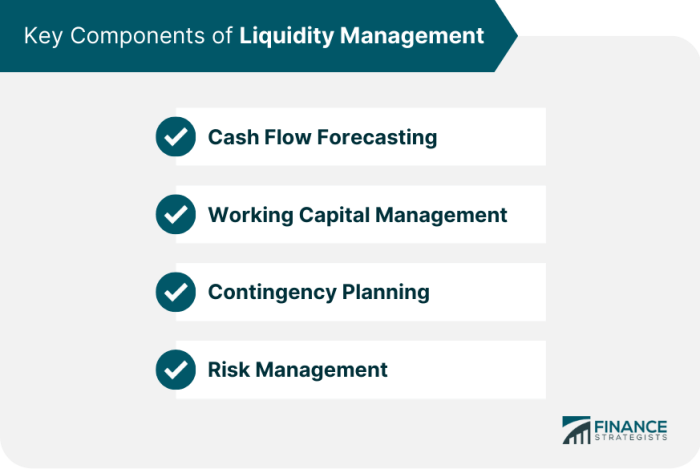
Effective liquidity management is the cornerstone of financial stability for any organization, regardless of size or industry. It’s about more than just having enough cash on hand; it’s about strategically managing inflows and outflows to ensure solvency, seize opportunities, and weather unforeseen challenges. This guide delves into the intricacies of liquidity management, exploring key metrics, optimization strategies, technological advancements, and regulatory considerations.
From understanding core components and crucial financial ratios to implementing proactive planning and leveraging technological solutions, we’ll examine how businesses can build resilient liquidity positions. We will also explore the interplay between liquidity management and other critical areas, such as logistics and regulatory compliance, highlighting best practices and real-world case studies to illustrate the importance of effective strategies.
Technology and Automation in Liquidity Management
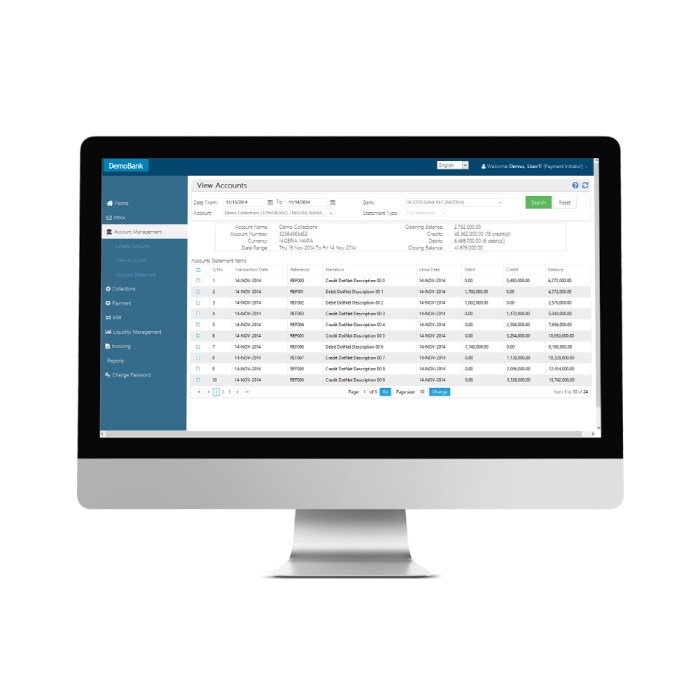
Effective liquidity management is crucial for the financial health of any organization. The complexities of modern finance, however, often necessitate a move beyond manual processes. Technology plays an increasingly vital role in automating various aspects of liquidity management, leading to significant improvements in efficiency, accuracy, and decision-making. This automation allows businesses to focus on strategic initiatives rather than being bogged down in administrative tasks.The integration of technology into liquidity management processes streamlines operations and reduces the risk of human error.
Automation tools can handle repetitive tasks such as data entry, reconciliation, and reporting, freeing up financial professionals to focus on higher-value activities like strategic planning and risk assessment. Furthermore, technology enables real-time monitoring of cash flows, providing a dynamic view of the organization’s liquidity position. This real-time visibility allows for proactive adjustments to mitigate potential shortfalls or surpluses.
Specialized Software for Liquidity Forecasting and Analysis
Specialized software solutions offer advanced functionalities beyond basic spreadsheet analysis. These tools utilize sophisticated algorithms and statistical models to generate accurate liquidity forecasts, considering various factors such as seasonal variations, anticipated sales, and expected payments. The software also provides detailed analysis of historical data, identifying trends and patterns that can inform future decision-making. This capability allows for a more proactive and data-driven approach to liquidity management, leading to better-informed decisions about borrowing, investing, and overall cash management.
For example, a retail company might use software to predict peak sales periods during holidays and adjust its borrowing accordingly to ensure sufficient cash on hand to meet increased demand.
Data Analytics for Improved Liquidity Management Decisions
Data analytics plays a pivotal role in enhancing decision-making within liquidity management. By leveraging historical data, market trends, and internal financial information, organizations can gain valuable insights into their liquidity position and identify potential risks and opportunities. Advanced analytics techniques, such as machine learning, can be employed to predict future cash flows with greater accuracy and identify anomalies that may indicate potential problems.
For instance, a sudden drop in accounts receivable might be flagged by the system, prompting an investigation into the cause and potential mitigation strategies. This proactive approach allows for early intervention, preventing potential liquidity crises.
Advantages and Disadvantages of Different Software Solutions
The choice of liquidity management software depends on the specific needs and resources of the organization. Different solutions offer varying levels of functionality, scalability, and cost.
- Cloud-based solutions: Offer accessibility from anywhere, scalability, and lower upfront costs. However, they may require a reliable internet connection and raise concerns about data security.
- On-premise solutions: Provide greater control over data security and customization options but require significant upfront investment and ongoing maintenance.
- Integrated solutions: Offer seamless integration with other financial systems, streamlining workflows. However, they may be more complex to implement and require specialized expertise.
- Stand-alone solutions: Offer focused functionality at a lower cost but may lack integration with other systems.
Liquidity Management and Logistics Management
Liquidity management and logistics management, while seemingly disparate disciplines, share significant overlaps and exhibit considerable synergistic potential. Both focus on the efficient and effective movement of resources, albeit with different objectives and metrics. Understanding the interplay between these two areas is crucial for optimizing operational efficiency and financial stability within any organization.
While liquidity management centers on ensuring sufficient readily available funds to meet short-term obligations and seize opportunities, logistics management focuses on the planning, implementation, and control of the flow of goods, services, and information between the point of origin and the point of consumption. Both, however, rely heavily on accurate forecasting, efficient processes, and risk mitigation strategies. The core principle of optimizing resource allocation underpins both fields, albeit with different types of resources.
Overlapping Areas and Synergies
Effective logistics significantly contributes to improved liquidity. Efficient supply chain management, a key component of logistics, minimizes inventory holding costs, reduces lead times, and enables timely collections from customers. This improved cash flow directly enhances liquidity. Conversely, robust liquidity allows for strategic investments in logistics infrastructure, such as advanced warehousing systems or optimized transportation networks, leading to further improvements in efficiency and cost reduction.
The two systems are mutually reinforcing.
Logistics’ Contribution to Improved Liquidity
Several key ways exist in which streamlined logistics positively impacts liquidity. Faster delivery times translate to quicker revenue generation and faster payment cycles. Optimized inventory management reduces storage costs and minimizes the risk of obsolescence, freeing up capital. Efficient procurement processes ensure timely acquisition of materials at competitive prices, reducing expenditure and improving profit margins. Effective logistics also enables better forecasting of demand, allowing businesses to manage their working capital more efficiently.
For example, a company utilizing just-in-time inventory management, a key logistics strategy, significantly reduces its need for large cash reserves to support high inventory levels.
Impact of Logistics Disruptions on Liquidity
Conversely, disruptions in logistics can severely compromise liquidity. Supply chain bottlenecks, caused by events such as natural disasters, pandemics, or geopolitical instability, can lead to production delays, increased inventory holding costs, and potential revenue losses. Delays in receiving raw materials can halt production, impacting sales and revenue streams. Similarly, disruptions in transportation can delay deliveries, leading to dissatisfied customers and potential penalties.
For example, the Suez Canal blockage in 2021 caused significant disruptions to global supply chains, resulting in substantial financial losses for many companies and impacting their liquidity. Furthermore, increased transportation costs due to fuel price hikes or geopolitical instability directly impact a company’s cash flow and can strain liquidity. Unexpected delays in payments from customers, often exacerbated by logistics issues, further exacerbate the problem.
Case Studies of Effective Liquidity Management
Effective liquidity management is crucial for the financial health and stability of any organization. A well-structured liquidity management system ensures a company can meet its short-term obligations, capitalize on opportunities, and withstand unexpected economic downturns. Analyzing successful and unsuccessful implementations provides valuable insights for improving liquidity management strategies.
Successful Liquidity Management Implementation at a Retail Giant
This case study examines a large retail chain that significantly improved its liquidity position through proactive strategic planning. Facing seasonal fluctuations in demand and unpredictable supply chain disruptions, the company implemented a comprehensive liquidity management system. This included: (1) Implementing sophisticated forecasting models to predict cash flow more accurately; (2) Establishing a centralized treasury function to optimize cash management; (3) Diversifying funding sources beyond traditional bank loans to include commercial paper and bonds; and (4) Negotiating favorable payment terms with suppliers.
The result was a substantial reduction in days sales outstanding (DSO), improved cash flow predictability, and increased resilience to economic shocks. The company’s ability to access various funding options during periods of high demand allowed them to maintain optimal inventory levels and meet customer needs without compromising their financial stability.
Strategic Planning Leading to Improved Liquidity at a Tech Startup
A rapidly growing technology startup initially struggled with cash flow management due to rapid expansion and significant upfront investments in research and development. To address this, they implemented a three-pronged approach: (1) They developed a detailed financial model projecting cash flows for the next 12-18 months, identifying potential shortfalls; (2) They secured a line of credit with a bank, providing a safety net for unexpected expenses; and (3) They negotiated extended payment terms with vendors, easing pressure on immediate cash outflows.
This strategic planning allowed the company to manage its growth responsibly, avoid financial distress, and ultimately secure a successful Series A funding round. The improved predictability of their cash flow significantly increased investor confidence.
Consequences of Poor Liquidity Management: A Construction Company’s Failure
A medium-sized construction company experienced significant financial difficulties due to poor liquidity management. They relied heavily on a single bank for financing, lacked robust cash flow forecasting, and had inflexible payment terms with subcontractors. When a major project was delayed due to unforeseen circumstances, the company faced a severe cash crunch. Unable to meet its short-term obligations, it defaulted on loans, leading to bankruptcy.
This situation highlights the critical importance of diversified funding sources, accurate cash flow forecasting, and proactive risk management in maintaining sufficient liquidity. The company’s failure serves as a cautionary tale emphasizing the devastating consequences of neglecting liquidity management.
Summary of Case Studies
| Company Type | Initial Liquidity Situation | Strategies Implemented | Outcome |
|---|---|---|---|
| Large Retail Chain | Seasonal fluctuations, supply chain disruptions | Sophisticated forecasting, centralized treasury, diversified funding | Improved DSO, increased resilience |
| Tech Startup | Rapid expansion, high R&D costs | Detailed financial model, line of credit, extended payment terms | Responsible growth, successful funding round |
| Construction Company | Reliance on single bank, poor forecasting, inflexible terms | None (lack of proactive management) | Bankruptcy |
Mastering liquidity management is a continuous process of monitoring, adapting, and optimizing. By understanding the key metrics, implementing robust strategies, and leveraging technological advancements, organizations can build a strong foundation for financial stability and sustainable growth. The insights presented in this guide provide a framework for navigating the complexities of liquidity management, ultimately empowering businesses to make informed decisions and achieve their financial objectives.
Common Queries
What are the potential consequences of poor liquidity management?
Poor liquidity management can lead to insolvency, missed payment obligations, inability to capitalize on opportunities, and damage to credit rating.
How often should liquidity be monitored?
Liquidity should be monitored regularly, ideally daily or weekly, depending on the business’s volatility and industry.
What role does forecasting play in liquidity management?
Accurate cash flow forecasting is crucial for proactive liquidity planning, allowing businesses to anticipate potential shortfalls and surpluses.
How can technology improve liquidity management?
Technology automates processes, improves forecasting accuracy, enhances data analysis, and facilitates better decision-making.