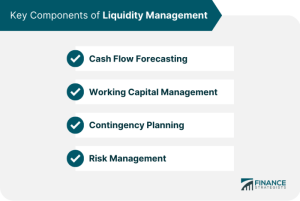
Effective liquidity management is the cornerstone of any financially sound business. It’s not merely about having enough cash on hand; it’s about strategically anticipating, acquiring, and deploying resources to meet operational needs, capitalize on opportunities, and weather financial storms. This exploration delves into the multifaceted world of liquidity management, encompassing strategies for diverse business models, practical tools, and the influence of external factors.
We will examine various tools and techniques for monitoring and managing liquidity, including cash flow projections and key financial ratios. We’ll also explore the crucial role of working capital management and the impact of both short-term and long-term financing options. Understanding how economic conditions, industry trends, and investment decisions influence liquidity is paramount, and we will provide clear examples and frameworks to help you navigate these complexities.
Defining Liquidity Management Strategies
Effective liquidity management is crucial for the financial health and stability of any business, regardless of size. It ensures that an organization has sufficient readily available funds to meet its short-term obligations, seize opportunities, and withstand unexpected financial shocks. This involves a proactive approach to forecasting, monitoring, and managing cash flow to prevent liquidity crises.Core principles of effective liquidity management revolve around maintaining a balance between profitability and risk.
This means strategically allocating funds to maximize returns while simultaneously ensuring sufficient reserves to cover immediate expenses and unexpected events. A key element is accurate forecasting of cash inflows and outflows, allowing for proactive adjustments to the liquidity position. Regular monitoring of key liquidity ratios, such as the current ratio and quick ratio, provides vital insights into the company’s short-term solvency.
Finally, establishing clear contingency plans for dealing with potential liquidity shortfalls is essential.
Liquidity Management Strategies for Various Business Sizes
The optimal liquidity management strategy varies significantly depending on factors such as business size, industry, and growth stage. Small businesses often rely on simpler strategies, while larger corporations employ more sophisticated techniques.
- Small Businesses: Small businesses may prioritize maintaining a healthy cash buffer, utilizing short-term financing options like lines of credit, and carefully managing accounts receivable and payable. They might also explore invoice factoring to accelerate cash inflows.
- Medium-Sized Businesses: Medium-sized businesses often implement more formalized cash flow forecasting and budgeting processes. They might also diversify their funding sources, potentially including longer-term loans or commercial paper. More sophisticated techniques like cash flow hedging might also be considered.
- Large Corporations: Large corporations typically employ advanced treasury management systems and sophisticated forecasting models. They often have access to a broader range of financing options, including commercial paper, bank loans, and bond issuances. They may also engage in complex hedging strategies to mitigate liquidity risk.
Assessing and Forecasting Liquidity Needs
Accurate assessment and forecasting of liquidity needs are fundamental to effective liquidity management. This involves a combination of historical data analysis, market research, and scenario planning.Businesses should regularly analyze their historical cash flow statements to identify trends and seasonality in cash inflows and outflows. This analysis can inform projections of future cash needs. Furthermore, incorporating external factors, such as economic forecasts and industry trends, into the forecasting process enhances its accuracy.
Sensitivity analysis, considering various scenarios (e.g., best-case, worst-case, and most-likely), allows businesses to prepare for a range of possible outcomes. For example, a retail business might forecast higher sales during the holiday season and adjust its inventory and staffing accordingly, anticipating increased cash outflows for purchases and payroll.
A Simple Liquidity Risk Management Framework
A robust liquidity risk management framework comprises several key components. First, establishing clear liquidity risk tolerance levels defines the acceptable level of risk the business is willing to take. Second, implementing regular liquidity monitoring and reporting provides timely insights into the company’s liquidity position. This might involve tracking key liquidity ratios and comparing them to industry benchmarks.
Third, developing contingency plans for managing liquidity shortfalls is crucial. This could include identifying potential sources of short-term funding, such as lines of credit or commercial paper. Finally, regularly reviewing and updating the liquidity risk management framework ensures its ongoing effectiveness. For instance, a manufacturing company might establish a minimum cash balance equivalent to three months of operating expenses as its liquidity risk tolerance level and develop a plan to access a line of credit should cash fall below this threshold.
Liquidity Management and Logistics Management
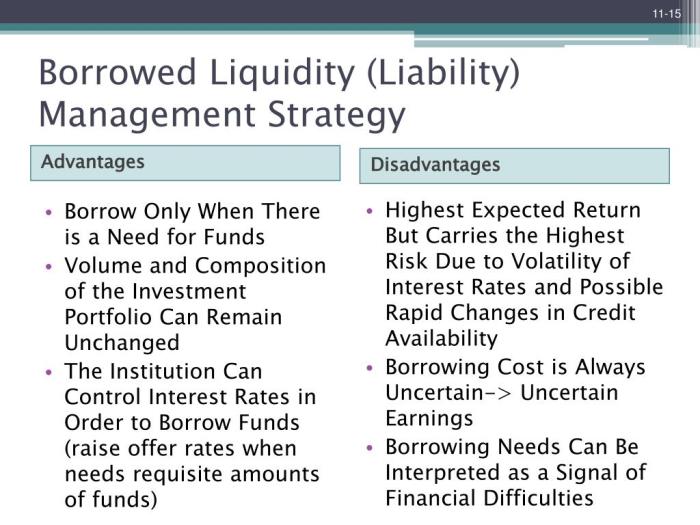
Liquidity management and logistics management, while seemingly disparate, are intrinsically linked in driving a company’s financial health and operational efficiency. Effective management of both is crucial for sustained success, particularly in ensuring a consistent flow of goods and cash. This section will explore the relationship between these two crucial areas, highlighting their interconnectedness and synergistic potential.
Comparison of Liquidity and Logistics Management Principles
Liquidity management focuses on ensuring a company has sufficient readily available cash to meet its short-term obligations. This involves managing cash inflows and outflows, optimizing working capital, and mitigating financial risks. In contrast, logistics management encompasses the planning, implementation, and control of the efficient, effective forward and reverse flow and storage of goods, services, and related information between the point of origin and the point of consumption to meet customers’ requirements.
While seemingly distinct, both disciplines share a common goal: optimization of resources to achieve operational efficiency and financial stability. Liquidity management focuses on the financial resources, while logistics management centers on the physical resources needed to run a business.
Efficient Logistics and Improved Cash Flow
Efficient logistics directly contributes to improved cash flow and enhanced liquidity. Optimized inventory management, streamlined supply chains, and reduced transportation costs all contribute to faster payment cycles and reduced holding costs. For instance, a company with a well-managed logistics system can reduce warehousing costs by implementing just-in-time inventory practices, freeing up capital that can be used to meet other financial obligations.
Similarly, efficient transportation networks minimize delays and ensure timely delivery of goods, leading to quicker payment from customers and improved cash flow predictability. Reduced spoilage and waste due to effective logistics also contribute positively to the bottom line, freeing up resources and boosting liquidity.
Overlaps and Synergies Between Liquidity and Logistics Management
Significant overlaps and synergies exist between liquidity and logistics management. Both areas require careful planning, forecasting, and risk management. Effective collaboration between these departments can optimize resource allocation and improve overall operational efficiency. For example, accurate demand forecasting, a key element in logistics, enables more precise cash flow projections in liquidity management. This allows for better planning of borrowing needs or investment opportunities.
Furthermore, efficient logistics can minimize working capital requirements by optimizing inventory levels, thereby directly impacting liquidity.
Inventory Management’s Impact on Liquidity
Inventory management is a critical component of both logistics and liquidity management. Holding excessive inventory ties up significant capital, reducing liquidity. Conversely, insufficient inventory can lead to lost sales and dissatisfied customers, negatively impacting cash flow. The optimal inventory level is a balance between meeting customer demand and minimizing capital tied up in stock.
| Inventory Level | Cash Flow Impact | Liquidity Impact | Example |
|---|---|---|---|
| Low (Near Stockouts) | Reduced sales revenue, potential loss of customers | Reduced cash inflows, potential for financial distress | A retailer experiencing frequent stockouts of popular items will see reduced sales and potentially lose customers to competitors. |
| Optimal (Meets Demand) | Consistent sales revenue, satisfied customers | Stable cash inflows, sufficient liquidity | A retailer with well-managed inventory maintains consistent sales and has enough cash on hand to meet its obligations. |
| High (Excess Inventory) | Increased storage costs, potential for obsolescence or spoilage | Reduced liquidity due to capital tied up in inventory | A manufacturer producing far more than the market demands faces high storage costs and risks product becoming obsolete or spoiling. |
| Very High (Significant Excess) | Significant storage costs, high risk of obsolescence and write-offs | Severely reduced liquidity, potential financial difficulties | A company holding massive amounts of outdated inventory may need to write it off, resulting in a significant loss and liquidity crisis. |
Case Studies in Liquidity Management
Effective liquidity management is crucial for business survival and success. A well-structured strategy ensures a company can meet its short-term obligations, capitalize on opportunities, and withstand unexpected financial shocks. Conversely, poor liquidity management can lead to insolvency and business failure. Examining real-world examples of both successful and unsuccessful strategies provides valuable insights for businesses of all sizes.Successful liquidity management involves proactive planning, accurate forecasting, and a flexible approach to funding.
Unsuccessful strategies often stem from inadequate planning, unrealistic financial projections, and a rigid adherence to outdated methods. Understanding these contrasting approaches allows businesses to learn from past mistakes and build more resilient financial structures.
Successful Liquidity Management: Walmart’s Inventory Optimization
Walmart, a global retail giant, demonstrates a mastery of liquidity management through its sophisticated inventory control system. Their strategy relies on highly accurate sales forecasting, coupled with a just-in-time inventory system. This minimizes the need for large amounts of working capital tied up in inventory, freeing up funds for other strategic initiatives. The system is supported by a robust supply chain, allowing for efficient replenishment of stock without excessive warehousing costs.
This approach ensures a consistent flow of cash while maintaining adequate stock levels to meet customer demand. Their success highlights the importance of integrating liquidity management with broader operational strategies.
Unsuccessful Liquidity Management: The Collapse of Lehman Brothers
The collapse of Lehman Brothers in 2008 serves as a stark warning about the dangers of inadequate liquidity management. Lehman’s aggressive investment strategies, coupled with a reliance on short-term funding, left the firm highly vulnerable to changes in market sentiment. When the credit markets froze, Lehman lacked the necessary liquidity to meet its obligations, resulting in its bankruptcy.
The failure to diversify funding sources and the overreliance on short-term debt proved catastrophic. This case study underscores the critical need for robust contingency planning and diversification of funding sources to withstand market downturns.
Lessons Learned from Case Studies
Several key lessons emerge from examining these and other case studies. Firstly, accurate forecasting and proactive planning are essential. Businesses must develop realistic financial projections and anticipate potential liquidity challenges. Secondly, diversification of funding sources is crucial to mitigate risk. Relying on a single funding source exposes the business to significant vulnerabilities.
Thirdly, regular monitoring and review of the liquidity position are vital. Businesses need to actively track their cash flow and adjust their strategies as needed. Finally, a flexible approach is essential. Rigid adherence to a single strategy can be detrimental in times of uncertainty.
Fictional Case Study: Tech Solutions Inc. Navigates a Liquidity Crisis
Tech Solutions Inc., a rapidly growing software company, experienced a sudden downturn in sales due to increased competition. This resulted in a significant cash flow shortfall, threatening the company’s ability to meet its payroll and other short-term obligations. The company’s initial response was to implement a cost-cutting program, reducing non-essential expenses. Simultaneously, they renegotiated payment terms with suppliers, extending payment deadlines to alleviate immediate pressure.
To secure additional funding, Tech Solutions secured a short-term loan from a bank, using their intellectual property as collateral. This multi-pronged approach allowed the company to navigate the crisis, stabilize its financial position, and ultimately emerge stronger. The successful outcome underscores the importance of a swift and decisive response to liquidity challenges, coupled with a willingness to explore diverse funding options.
Mastering liquidity management is a dynamic process that requires constant vigilance and adaptation. By understanding the core principles, implementing robust tools and techniques, and proactively addressing potential risks, businesses can ensure financial stability and seize growth opportunities. The strategies and insights presented here offer a practical roadmap for navigating the complexities of liquidity, empowering businesses to achieve sustainable financial health and long-term success.
Questions and Answers
What is the difference between liquidity and solvency?
Liquidity refers to a company’s ability to meet its short-term obligations, while solvency refers to its ability to meet its long-term obligations.
How can I improve my company’s liquidity ratios?
Improving liquidity ratios involves strategies such as reducing inventory, improving collection times on receivables, and securing additional lines of credit.
What are some early warning signs of a liquidity crisis?
Early warning signs include declining cash flow, increasing debt, difficulty meeting payment deadlines, and strained relationships with suppliers.
What role does forecasting play in liquidity management?
Accurate forecasting of cash inflows and outflows is crucial for proactive liquidity management, allowing businesses to anticipate potential shortfalls and plan accordingly.